Gear · checklist
What to Pack for a Ghost Town Expedition
The essential gear list for exploring ghost towns safely — water, navigation, footwear, and vehicle prep.
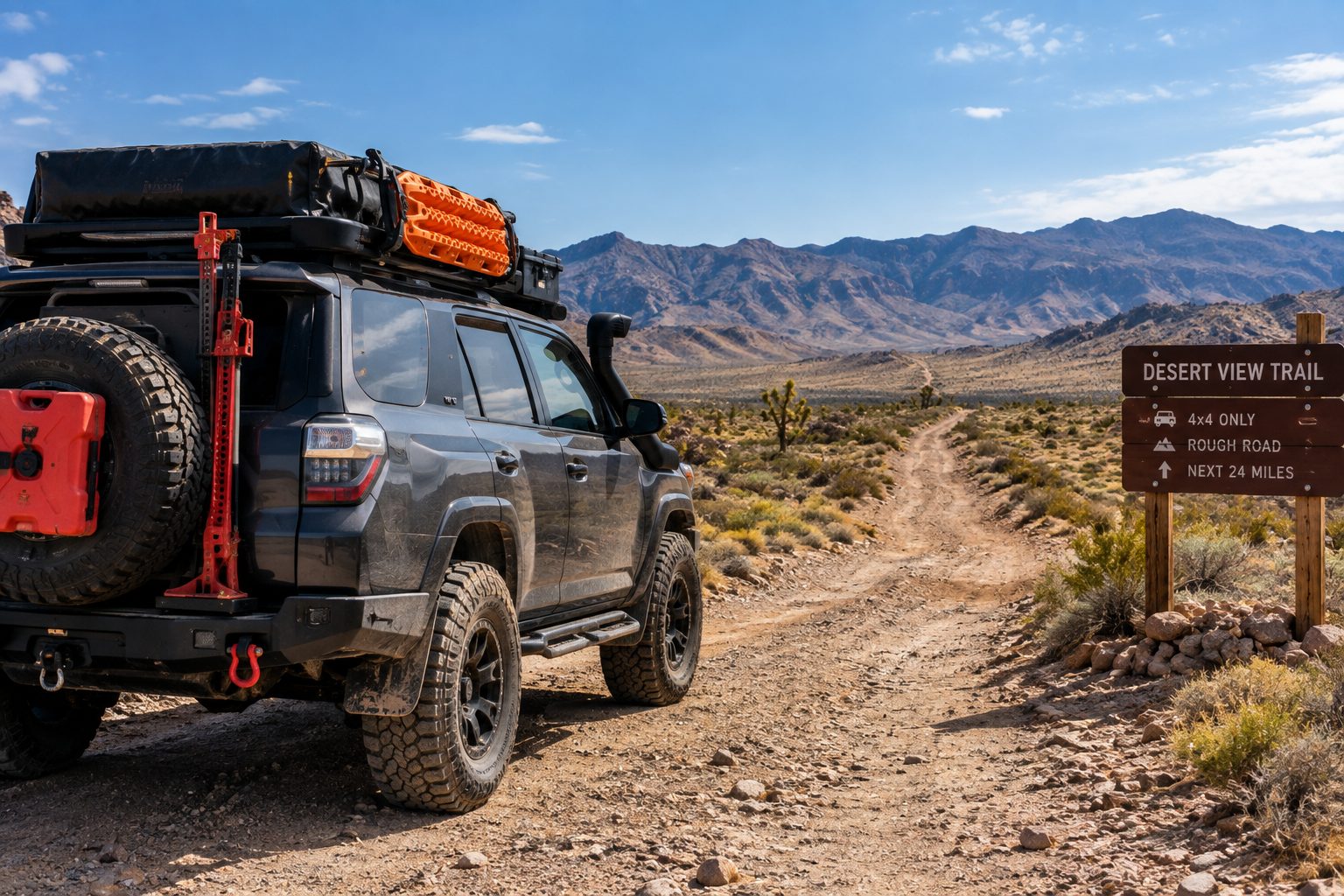
If you've read our beginner's road trip checklist, you've got the basics of planning a first visit. This ghost town gear checklist goes a level deeper — built for the off-road and adventure crowd tackling rougher approach roads, longer backcountry stretches, and towns with zero services for miles in any direction. Treat it as the kit list for when a ghost town visit starts looking less like a day trip and more like an expedition.
Navigation and communication gear
Offline maps, downloaded before you lose signal. Most ghost town approach roads drop cell coverage well before you arrive — an offline map layer (in your phone's maps app or a dedicated GPS unit) is the baseline, not an upgrade.
A satellite communicator. For routes with no cell service and no other traffic, a two-way satellite messenger (the category that includes devices like Garmin's inReach line or similar GPS messengers) lets you check in or call for help when a phone simply can't. This is the single highest-value upgrade for anyone treating ghost town exploring as a recurring hobby rather than an occasional day trip.
A paper map as backup to all of the above. Electronics fail or run out of battery; a paper map doesn't.
A written-down plan left with someone who isn't with you. Your route, your destination, and your expected return time — free, and more effective than any piece of gear on this list.
Vehicle prep and recovery gear
This is where "ghost town road trip" and "off-road expedition" start to diverge, and it's the category most first-timers underpack for.
Know your clearance before you commit to a route. Some ghost towns, like Chloride, Arizona, have access roads — Chloride's mural road specifically — that call for a high-clearance vehicle. Others are fully paved. Match your vehicle to the specific route, not to ghost towns in general.
A full tank plus a fuel reserve. Assume the last services are the last town you passed through, not the ghost town itself.
A spare tire, a tire repair kit, and a portable air compressor. Unpaved approach roads are where flats happen, and a compressor matters for a second reason below.
Traction boards and a basic recovery strap, if your route crosses any soft sand washes. If you do drop tire pressure for soft sand — experienced off-roaders typically run 10–18 psi in those conditions, down from the 30–35 psi range most passenger vehicles run on pavement — re-inflate with your compressor before you're back on a paved road. This is intermediate-level technique, not a requirement for every graded dirt road, so size it to your actual route.
A basic tool kit and jumper cables or a jump pack. Nothing exotic — the goal is handling a flat, a dead battery, or a loose part without that being the thing that ends your trip.
If rockhounding is part of your backcountry rotation too, a lot of this overlaps directly with what you'd already be carrying — Rockhounding.org's gear guide covers the same navigation and vehicle-equipment categories in more depth from that angle, and it's worth a look if you're building one kit for both hobbies.
Water, food, and hydration
Water: a gallon per person per day as a floor, more in hot months or if you're covering real distance on foot. This is the one item that most reliably turns a good trip bad when it's skipped, and it scales with heat and exertion, not just hours in the car.
Shelf-stable food and electrolytes, especially for a full-day outing in desert heat where sweat loss outpaces plain water alone.
Footwear and clothing for hazardous ground
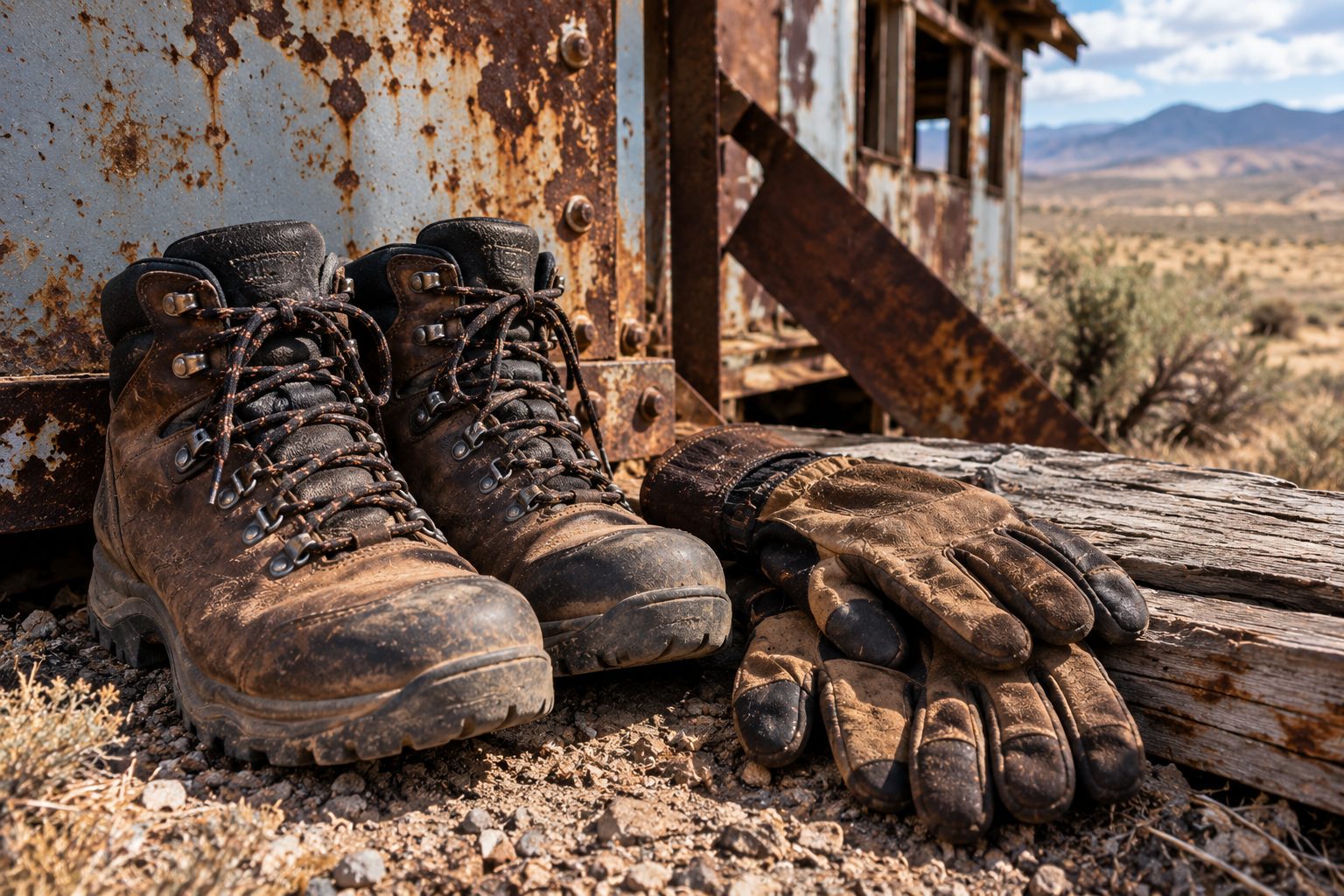
Sturdy, closed-toe boots. Ghost towns are full of rusted metal, broken glass, and uneven footing — this is a tetanus-and-twisted-ankle risk, not just a comfort choice, and it rules out sandals entirely.
Layers, regardless of season. Desert mornings and afternoons swing wide, and elevation gain at higher sites adds another layer of temperature change on top of that.
Light gloves, useful if you're near debris, rusted structures, or old fencing and want a barrier between your hands and tetanus-prone metal without needing to touch anything you shouldn't move anyway.
Safety and first aid gear
A real first aid kit, not a token one — tetanus risk from rusted metal and the chance of a fall in an unstable structure are the two most common ways a ghost town visit produces an actual injury.
A headlamp or flashlight, even for a daytime visit. Mine openings, cellar holes, and the interiors of standing structures are dim at any hour.
A whistle. Low-cost, reliable way to signal for help if you're separated from your group or your voice won't carry over wind or distance.
A multitool. General-purpose utility, not for anything that touches a structure or an artifact — see our etiquette guide on why nothing gets removed or altered on-site, ever.
Documentation gear (bring a camera, not a shovel)
A camera or phone with extra battery capacity, since there's rarely anywhere to recharge once you're on-site. A portable power bank is cheap insurance against your only navigation device also being your only camera.
A small notebook, useful for noting what you saw and where — especially handy if you plan to file a field report afterward.
What's deliberately absent from this list: anything for digging, detecting, or removing. Photography is the only collection method that's consistently legal across public, private, and mixed-ownership ghost towns — our legal access guide covers exactly where the lines are.
Quick-print gear checklist
The full kit from above, condensed into one list you can screenshot or print before you load the vehicle:
- Offline maps downloaded
- Satellite communicator (for remote, low-traffic routes)
- Paper map backup
- Route and return time shared with someone off-trip
- Full tank plus fuel reserve
- Spare tire, repair kit, and portable air compressor
- Traction boards and recovery strap (soft-sand routes)
- Basic tool kit and jumper cables
- Water — 1+ gallon per person, more in heat
- Shelf-stable food and electrolytes
- Sturdy closed-toe boots
- Layers for temperature swings
- Light gloves
- First aid kit
- Headlamp or flashlight
- Whistle
- Multitool
- Camera/phone with power bank
- Small notebook
New to off-road gear? You don't need to own all of this yet
If you're a first-timer coming to this list from the gearhead side rather than the ghost-town side, you don't need to buy a full recovery kit before your first backcountry trip. Many outdoor retailers and some off-road clubs rent traction boards, air compressors, and satellite communicators by the weekend — a reasonable way to test whether a given piece of gear earns a permanent spot in your vehicle before spending real money on it. Start with the free and cheap items on this list (offline maps, a written route plan, water, a first aid kit) and add vehicle-recovery gear as your routes get more ambitious, rather than buying everything at once for a first trip that may not need it.
Two towns, two different gear priorities
Vulture City, Arizona is the lighter-gear case: it's reached by about 12 paved miles off Wickenburg, operates on seasonal open days with paid admission, and doesn't demand serious vehicle prep. The gear that matters most here is more mundane — cash for admission, water for a desert walk with no shade, and a check on current open days before you drive out, since hours shrink in summer heat.
Chloride, Arizona pulls from the full list above. It's a living town where the main areas are easy to reach, but its mural road specifically calls for a high-clearance vehicle — exactly the kind of route where the vehicle-prep section of this checklist stops being optional.
Frequently asked questions
- Do I really need a satellite communicator for a ghost town trip?
- For anything reached by a well-traveled, short dirt road with other visitors around, probably not — a downloaded offline map and a plan shared with someone covers most trips. For longer, more remote routes with little traffic, it's the gear upgrade that matters most if something goes wrong.
- Is a 4x4 required to visit ghost towns?
- No — it depends entirely on the specific route. Some, like the approach to Vulture City, are fully paved. Others, like Chloride's mural road, specifically call for high clearance. Check the access notes for your destination rather than assuming either way.
- What's the one piece of gear people most often forget?
- A fuel and water reserve beyond what feels necessary. Both are easy to underestimate because the drive out always looks shorter on a map than it feels in the vehicle, and neither is available once you're at most sites.
- Does the gear list change by season?
- Yes, mainly through water and timing rather than different equipment. Hot-weather trips push water needs up and favor an early start to avoid afternoon heat; our road trip checklist covers seasonal timing for specific towns in more depth. The core gear list above holds steady year-round — what changes is how much water you pack and when you start.
Build your kit, then join Ghost Town Society
Good gear gets you there safely; good information gets you there efficiently. Ghost Town Society membership ($10/year) adds a trip passport and field badges as you log visits. Society Pro ($40/year) is the real planning upgrade for this audience: historic USGS topo maps, land-status overlays showing BLM, Forest Service, and park boundaries before you commit to a route, and a private field log for your own notes — practical companions to the navigation gear above, not just a nice-to-have. Join Ghost Town Society and plan your next route with the same data we use to build these guides.