Trip planning · Las Vegas
Ghost Towns Near Las Vegas, Nevada
Skip the Strip for a day — the best real ghost towns you can reach from Las Vegas.
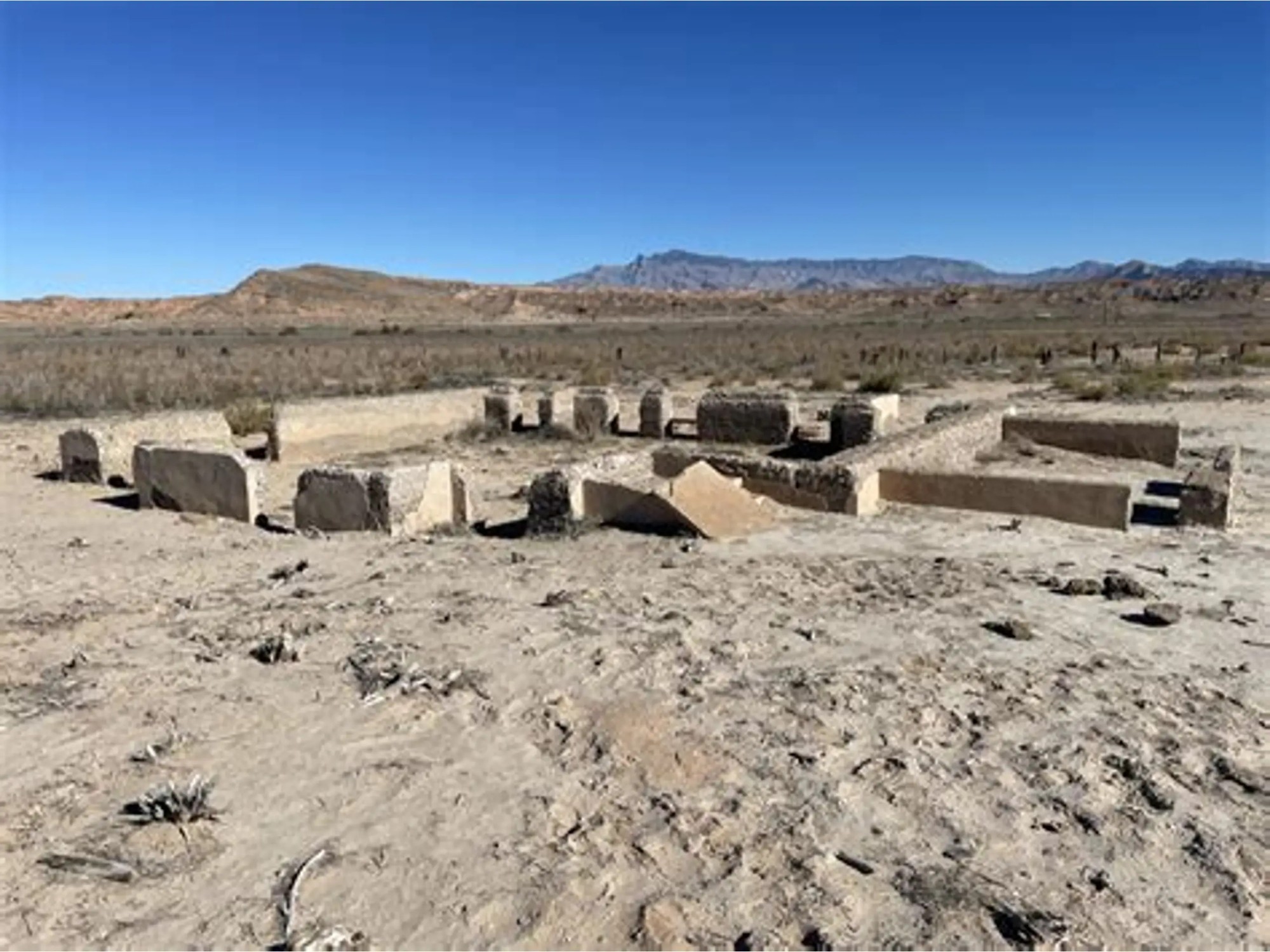
Las Vegas sits closer to real, documented ghost towns than most visitors realize — not recreated attractions, but actual abandoned and near-abandoned towns with dates, names, and a paper trail. Three worth knowing about range from a 90-minute detour to a full day trip, each with a different story and a different level of effort. Here's what you're actually driving to, how far it is, and which one fits the time you've got.
Quick Reference
| Town | Distance from Las Vegas | Drive Time | Road | Best For |
|---|---|---|---|---|
| St. Thomas | ~70 miles | ~1.5 hours | Paved, then a short dirt road | A half-day trip, drought/history angle |
| Rhyolite | ~123 miles | ~2 hours | Fully paved | A classic mining ghost town, best photographed |
| Goldfield | ~185 miles (about 3 hours) | ~3 hours | Fully paved, no dirt required | A full day or overnight, still a living town |
St. Thomas: The Closest, and the Strangest Story
St. Thomas is the easiest of the three to fit into a half day, at roughly 70 miles and about an hour and a half from the Strip via Lake Mead National Recreation Area. It's also the one with the most unusual history: Mormon farmers settled it in 1865, and it grew into a quiet town of around 500 people before Hoover Dam's rising waters forced it underwater in 1938 — the last resident famously paddled away from his home as the lake reached his door. For decades it sat as much as 60 feet below the surface. Two decades of drought have since lowered Lake Mead enough that the site has been visible continuously since the early 2000s, exposing building foundations, old cisterns, and street-line building pads along a 2.5-mile loop trail.
Getting there means entering Lake Mead NRA (standard park entrance rules apply) and driving about three miles of dirt access road off NV-169 near Overton — manageable for most passenger vehicles according to the National Park Service, though some guides recommend a bit more ground clearance if you're not used to unpaved roads. There's no shade anywhere on the walk, so go in the morning and bring more water than you think you need, especially outside winter. If you're short on time but want a real ghost town experience without a long drive, this is the one.
Rhyolite: The Classic, and the Most Photographed
Rhyolite is about 123 miles and roughly two hours from Las Vegas, just off NV-374 near Beatty — and it's widely regarded as the most photographed ghost town in Nevada, for good reason. Gold was discovered in the nearby Bullfrog Hills in 1904, and the town grew fast enough to have electric lights, water mains, a stock exchange, and a three-story bank within three years — then just as quickly emptied out after the Panic of 1907 cut off its funding. Because it was built from concrete and stone rather than lumber, its best-known structures actually survived: the three-story shell of the Cook Bank building, the Tom Kelly Bottle House (built from roughly 50,000 glass bottles in 1906), and the old train depot. Right next door, the free Goldwell Open Air Museum adds a very different kind of attraction — outdoor sculpture installations, including a 24-foot steel prospector figure, set against the same desert backdrop.
Rhyolite is on BLM land, free, open year-round, and reachable entirely by paved road, so there's no vehicle requirement to worry about. It also sits almost directly on the route into Death Valley National Park from the Beatty side, so if a Death Valley trip is already on your list, this is close to a zero-extra-effort stop rather than a separate outing.
Goldfield: The Full-Day Option, and the Only One That's Still Alive
Goldfield is the farthest of the three — roughly three hours and about 185 miles north on US-95 — and it's also the only one that's genuinely still inhabited. About 225 people live there today, and it remains the seat of Esmeralda County, which makes it less a true ghost town and more what locals and travel writers both tend to call a "living ghost town." At its peak around 1906, it held somewhere between 20,000 and 30,000 people, four newspapers, and the Goldfield Hotel, built in 1908 and once considered the most luxurious building between Chicago and San Francisco. A 1923 fire, started by an exploding moonshine still, burned more than fifty square blocks of the mostly wooden town, and what survived is what you see today.
The Goldfield Hotel itself is privately owned and closed to casual walk-in visits, though it opens for guided tours during Goldfield Days each August — worth timing a trip around if the hotel is the draw for you. What you can see any time: the 1907 Esmeralda County Courthouse, still in active use under its original Tiffany lamps; the Florence Mine tour; the Goldfield Cemetery; and the International Car Forest of the Last Church, an offbeat installation of roughly 40 graffitied cars planted nose-down in the desert at the edge of town. Because it's directly on US-95 between Tonopah and Beatty, no dirt-road driving is required, but at three hours each way it's a realistic full day trip or a one-night stay rather than a quick detour — plan fuel and food stops accordingly, since services thin out well before you arrive.
Picking the Right One for Your Time
If you've got a half day and want the shortest round trip, St. Thomas is the clear choice — it's the closest, and its drought-and-dam story is unlike anything else on this list. If you've got a full day and want the single most classic "old mining town" look, Rhyolite is the better pick, especially if you're combining it with a Death Valley stop. If you're willing to commit a full day or an overnight and want somewhere that's still a real town with a courthouse and residents rather than only ruins, Goldfield is worth the extra driving — just don't try to squeeze it into a half-day Vegas itinerary along with anything else.
Best Time of Year to Go
All three sit in low desert, which means summer is the season to plan around rather than ignore. St. Thomas and Rhyolite both offer essentially zero shade, and triple-digit afternoon temperatures are common across this part of Nevada from roughly June through August — fine for an early-morning visit, genuinely risky for a midday one. October through April is the more comfortable window for either site, with spring (March–May) adding mild temperatures and occasionally a bit of desert wildflower color near St. Thomas's Lake Mead setting. Goldfield sits at roughly 5,686 feet, noticeably higher than St. Thomas or Rhyolite, which takes the edge off summer heat (July's average high runs closer to 90°F than the 110s-plus you'd see in low desert) but brings real winter cold — average annual snowfall is close to 18 inches, with sub-zero lows on record. Check road and weather conditions before a December or January trip if you're driving up from Las Vegas.
What to Bring, Regardless of Which One You Pick
All three sit in genuine desert, and none of them have reliable food, water, or cell service once you're off the highway. Bring more water than feels necessary, start early to avoid the worst heat and the harshest midday light, and don't expect restrooms or a gift shop at St. Thomas or Rhyolite specifically — Goldfield is the only one with actual services, since it's a living town. Our road trip checklist and gear checklist go deeper into packing for any of these if it's your first ghost town trip from Las Vegas.
Frequently asked questions
- Which ghost town near Las Vegas is best for a half-day trip?
- St. Thomas. At about 70 miles and 90 minutes each way, it's the only one of the three that comfortably fits into half a day along with the drive.
- Do I need a 4x4 to visit any of these?
- No. Rhyolite and Goldfield are reached entirely by paved road. St. Thomas requires about three miles of dirt road that the National Park Service says most standard vehicles can handle, though drivers unfamiliar with unpaved roads may want extra clearance.
- Is Goldfield actually a ghost town if people still live there?
- It's usually described as a "living ghost town" — about 225 residents remain, and it's still the Esmeralda County seat, but it's a small fraction of its roughly 20,000-person peak in 1906, and much of the original town burned in a 1923 fire. Both things are true at once: it's inhabited, and it's also a dramatic shadow of what it was.
- Can I combine more than one of these in a single trip?
- Realistically, pair St. Thomas with other Lake Mead-area plans, and pair Rhyolite with a Death Valley trip, since both sit close to those routes already. Goldfield is far enough north that it's best treated as its own dedicated day rather than bolted onto a St. Thomas or Rhyolite visit.
Explore the Map
These three are only a starting point — explore the map to see every documented ghost town within driving range of Las Vegas and plan a trip around the distance and story that fits you best.