The story
Comet worked the Comet and Gray Eagle mines from the 1880s, its fortunes swinging with lead-zinc prices; the enormous timber mill dominating the gulch dates to a 1920s retooling that kept 300 people employed until the war closures of the early 1940s emptied it for good.
It's the classic drive-up Montana ghost: two dozen gray buildings and the great sagging mill, all private property watched by neighbors, best enjoyed from the road with a long lens. The Boulder River valley's arsenic legacy made the district a Superfund story downstream.
What remains today
The massive mill structure, miners' houses and boarding house rows, and headframes — one of Montana's most photogenic clusters.
Society Pro
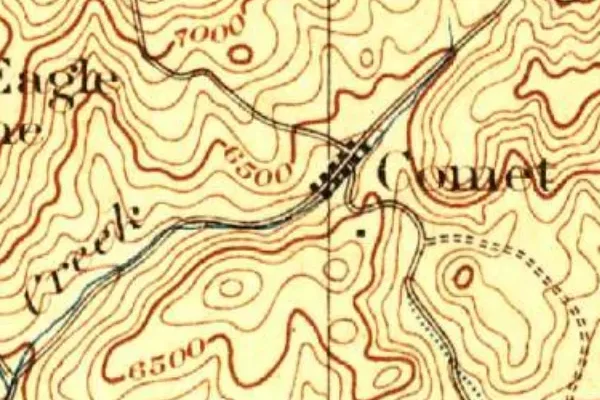
Comet on the old USGS survey, and what the record holds around it
Within five miles the record maps 411 mine shafts, adits and prospect pits, 250 named mineral sites, 15 lost places and 0 cemeteries. Pro puts them on the map with the 1879–1919 survey underneath and a swipe to today.
Questions from the field
- Can you go inside Comet's buildings?
- No — the entire town is private and locals do check. It's a from-the-road site, and the road gets you within feet of everything worth seeing.
From the field
The most valuable part of this record is the part only visitors can write.
Stamp your passport
Check in at Comet — GPS-verified visits earn an inked stamp.
File a field report
Road conditions, what's still standing, what's gone — your report joins the record.
Add photographs
Credited, dated, and preserved as part of Comet's permanent record.
No field reports yet — sign in to file the first.
Primary sources for this record
- — USGS GNIS feature 781541
- — Jefferson County — Comet/High Ore district
- — EPA Basin Mining Area records