The story
Randsburg boomed on the Yellow Aster gold discovery of 1895 — named, like its district, for South Africa's Rand — and with its sister camps Johannesburg and Red Mountain held several thousand people around 1900. Gold, then tungsten in WWI, then silver at Red Mountain kept the district lurching along for decades.
It never quite died. About sixty people live along Butte Avenue today, where the general store still pulls phosphates at its original soda fountain and weekend riders fill the street — Randsburg is the model 'living ghost town,' half museum, half community.
What remains today
An intact false-front main street: the general store (1896), opera house, churches, jail, and mining headframes on the hills.
Society Pro
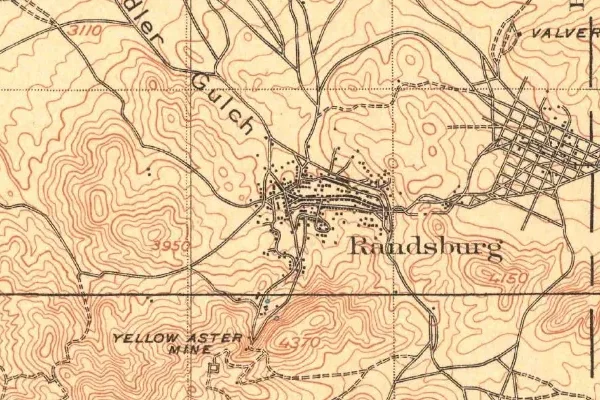
Randsburg on the old USGS survey, and what the record holds around it
Within five miles the record maps 1,230 mine shafts, adits and prospect pits, 318 named mineral sites, 1 lost places and 0 cemeteries. Pro puts them on the map with the 1879–1919 survey underneath and a swipe to today.
From the archives

Randsburg turns up on 775 digitized newspaper pages from California — read them free in the Library of Congress's Chronicling America collection.
Source: Library of Congress digital collections.
Questions from the field
- Is Randsburg abandoned?
- No — roughly sixty residents remain, and weekend businesses operate along the historic main street. It's called a living ghost town: the boom is gone, the town isn't.
From the field
The most valuable part of this record is the part only visitors can write.
Stamp your passport
Check in at Randsburg — GPS-verified visits earn an inked stamp.
File a field report
Road conditions, what's still standing, what's gone — your report joins the record.
Add photographs
Credited, dated, and preserved as part of Randsburg's permanent record.
No field reports yet — sign in to file the first.
Primary sources for this record
- — USGS GNIS feature 1661284
- — Rand Desert Museum, Randsburg
- — Kern County historical records