The story
Ballarat, named for the Australian goldfield, was never a mine itself — it was the saloon, supply, and recuperation town for the mines of the Panamint Range, with around 500 people, seven saloons, and no church at its 1900 peak. The post office closed in 1917 when the paying mines quit.
Its soul was its holdouts, above all prospector 'Seldom Seen Slim,' who lived alone in the ruins until 1968 and got a broadcast funeral attended by hundreds; his epitaph reads 'half wild burro.' A caretaker and a small store keep Ballarat semi-alive today at the mouth of the valley, and the adobe ruins photograph beautifully against the Panamints.
What remains today
Adobe ruins, the jail, the cemetery with Slim's grave, and a caretaker's store. A weathered truck often photographed here is associated by lore with the Manson family's nearby Barker Ranch era.
Society Pro
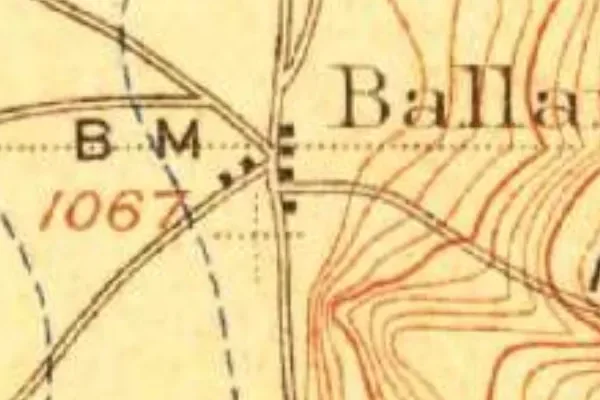
Ballarat on the old USGS survey, and what the record holds around it
Within five miles the record maps 114 mine shafts, adits and prospect pits, 14 named mineral sites, 0 lost places and 0 cemeteries. Pro puts them on the map with the 1879–1919 survey underneath and a swipe to today.
From the archives
Ballarat turns up on 4,181 digitized newspaper pages from California — read them free in the Library of Congress's Chronicling America collection.
Source: Library of Congress digital collections.
Questions from the field
- Who was Seldom Seen Slim?
- Charles Ferge, Ballarat's last full-time prospector, who lived in the ghost town until his death in 1968. His funeral drew hundreds and was broadcast live — the end of the single-blanket burro prospector era.
From the field
The most valuable part of this record is the part only visitors can write.
Stamp your passport
Check in at Ballarat — GPS-verified visits earn an inked stamp.
File a field report
Road conditions, what's still standing, what's gone — your report joins the record.
Add photographs
Credited, dated, and preserved as part of Ballarat's permanent record.
No field reports yet — sign in to file the first.
Primary sources for this record
- — USGS GNIS feature 252847
- — Inyo County historical records — Ballarat
- — Ridgecrest/Trona area historical societies