The story
Panamint City was founded by stagecoach robbers who found silver while hiding from the law, and its reputation only went downhill from there: Wells Fargo famously refused to open an office, and the mine owners — Nevada senators Stewart and Jones — shipped their bullion in unstealable half-ton balls. Perhaps 2,000 people packed upper Surprise Canyon in 1874-75.
The panic of 1875 broke the backers, and in July 1876 a cloudburst sent a flash flood down the single-street canyon town, wrecking much of it. By 1877 Panamint was done — a four-year city.
Its brick smelter smokestack from 1875 still stands a mile above the canyon floor, now one of the great backpacking destinations in the Death Valley backcountry: the road washed out permanently in 1984, so the toughest town in the Panamints is reachable only on foot again.
What remains today
The iconic brick smokestack, mill ruins, and a few later cabins, 6,300 feet up Surprise Canyon in Death Valley National Park wilderness.
Society Pro
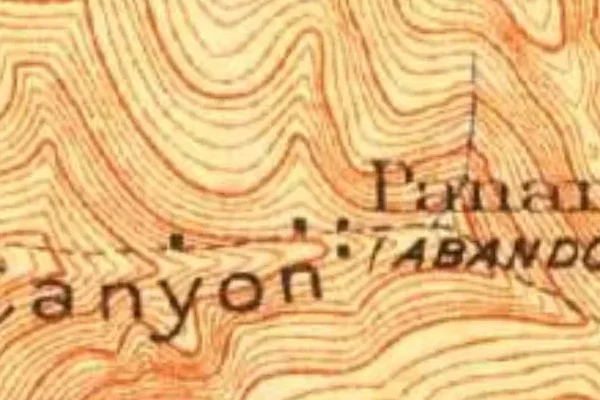
Panamint City on the old USGS survey, and what the record holds around it
Within five miles the record maps 137 mine shafts, adits and prospect pits, 29 named mineral sites, 1 lost places and 0 cemeteries. Pro puts them on the map with the 1879–1919 survey underneath and a swipe to today.
From the archives
Panamint City turns up on 167 digitized newspaper pages from California — read them free in the Library of Congress's Chronicling America collection.
Source: Library of Congress digital collections.
Questions from the field
- Can you drive to Panamint City?
- No — floods destroyed the canyon road decades ago. It's a full-day out-and-back hike or an overnight, entirely within national park wilderness.
- Why did Wells Fargo refuse Panamint City?
- The camp was founded and frequented by highwaymen; robbery was considered a certainty. The mine owners' solution was casting silver into 450-pound cannonballs no bandit could carry off.
From the field
The most valuable part of this record is the part only visitors can write.
Stamp your passport
Check in at Panamint City — GPS-verified visits earn an inked stamp.
File a field report
Road conditions, what's still standing, what's gone — your report joins the record.
Add photographs
Credited, dated, and preserved as part of Panamint City's permanent record.
No field reports yet — sign in to file the first.
Primary sources for this record
- — Death Valley National Park — Surprise Canyon/Panamint City
- — Inyo County records — Panamint mining district
- — Contemporary accounts, Panamint News (1874–75)