The story
Silver isn't supposed to occur in sandstone — which is why the 1866 assays from White Reef were dismissed as fraud until the ore kept coming. By 1879 Silver Reef was the biggest town in southern Utah, a Gentile boomtown of 2,000 in Mormon Dixie whose payrolls, ironically, kept neighboring St. George's economy alive.
Falling silver prices and flooding mines ended it by the 1890s. The stone Wells Fargo office survived to become a museum and gallery, anchoring a site now ringed by modern homes — a ghost town absorbed into a subdivision, with its story told better than most.
What remains today
The 1877 Wells Fargo building (museum), Cosmopolitan restaurant ruin, powder house, and interpreted foundations among the red hills.
Society Pro
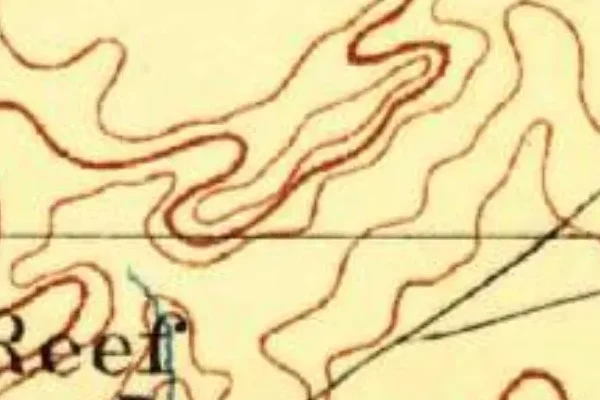
Silver Reef on the old USGS survey, and what the record holds around it
Within five miles the record maps 97 mine shafts, adits and prospect pits, 91 named mineral sites, 1 lost places and 5 cemeteries. Pro puts them on the map with the 1879–1919 survey underneath and a swipe to today.
From the archives

Relics of the boom days in Silver Reef, a silver-mining ghost town, near the town of Leeds in southwest Utah

Relics of the boom days in Silver Reef, a silver-mining ghost town, near the town of Leeds in southwest Utah

The old Wells Fargo Express stagecoach office in Silver Reef, a silver-mining ghost town, near the town of Lee

A portion of sculptor Jerry Anderson's studio on the outskirts of southwest Utah's Silver Reef ghost town
Silver Reef turns up on 59,228 digitized newspaper pages from Utah — read them free in the Library of Congress's Chronicling America collection.
Source: Library of Congress digital collections.
Questions from the field
- Why was silver at Silver Reef so unusual?
- Silver ore in sandstone is geologically rare enough that early reports were assumed to be salted claims. The deposit is still cited in geology texts — and it produced roughly $10 million in 1870s dollars.
From the field
The most valuable part of this record is the part only visitors can write.
Stamp your passport
Check in at Silver Reef — GPS-verified visits earn an inked stamp.
File a field report
Road conditions, what's still standing, what's gone — your report joins the record.
Add photographs
Credited, dated, and preserved as part of Silver Reef's permanent record.
No field reports yet — sign in to file the first.
Primary sources for this record
- — USGS GNIS feature 1445602
- — Silver Reef Museum (Wells Fargo building)
- — Utah Geological Survey — Silver Reef district