Culture · liminal spaces
Why Ghost Towns Are Trending Online (And Where to See Them in Real Life)
The abandoned-places aesthetic is everywhere online — here's where to actually go see it for real.
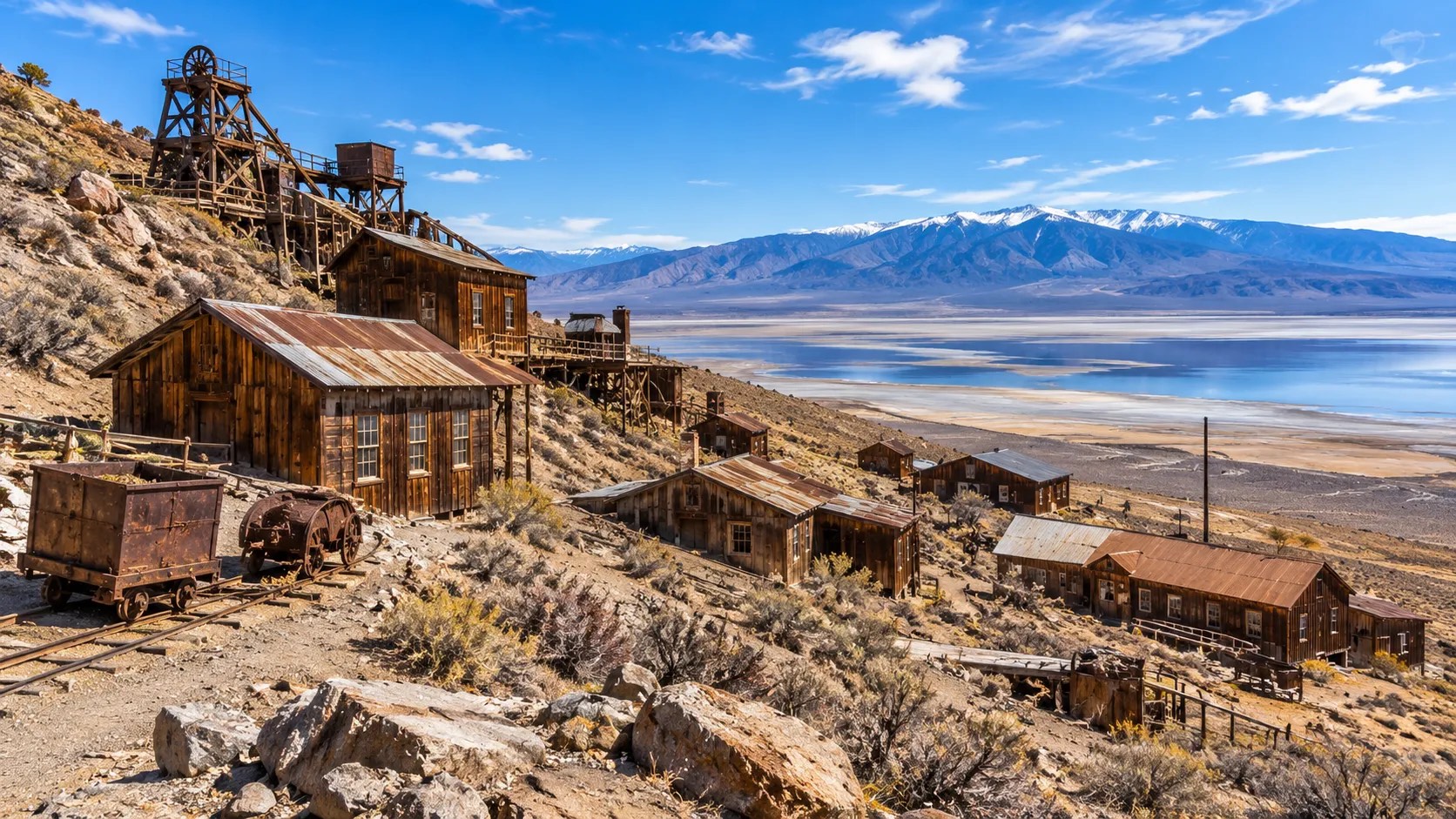
You've scrolled past it even if you didn't know what to call it: an empty hallway, a motel room with no one in it, a mall from a decade nobody can quite place, lit in that specific sickly yellow, soundtracked to something dreamy and a little sad. It's called the "liminal space" aesthetic, and it's one of the biggest recurring moods on the internet right now. What a lot of people scrolling through it don't realize is that actual, real-world ghost towns — the kind you can drive to and walk through — are the physical version of exactly what that aesthetic is chasing. This is where the feed and the real world actually connect.
What the "Liminal Space" Trend Actually Is
The aesthetic traces back to a specific moment: a 2019 post on 4chan introduced "The Backrooms," a creepypasta illustrated with a plain, endless yellow hallway, and it spread from there to Reddit, Twitter, and TikTok. "Liminal" borrows its name from anthropology — Victor Turner's 1960s work on the in-between stage of a ritual, and Marc Augé's 1992 idea of "non-places" like airports and hotel lobbies that people pass through but never really inhabit. Online, it's come to mean any empty, transitional, slightly-wrong-feeling space: a stairwell, a parking garage, a closed storefront — anywhere familiar enough to recognize and empty enough to feel unsettling.
The numbers behind it are real and large. By November 2022, r/LiminalSpace had passed 500,000 members, the bot account @SpaceLiminalBot had topped 1.2 million followers on Twitter, and the hashtag #liminalspaces had cleared two billion views on TikTok. YouTube's own data shows the trend hasn't cooled since — the platform reported more than two billion views in just the first eight months of 2025 alone for videos with "backrooms" in the title. A24 is releasing a Backrooms feature film, and 2025 already saw Exit 8, a film based on a liminal-space video game, hit theaters. This isn't a niche meme anymore; it's a mainstream aesthetic with real production budgets behind it.
Why Ghost Towns Fit This Aesthetic Better Than Almost Anything
Most liminal-space content is either staged, AI-generated, or shot in ordinary places (an empty office at 2am, a vacant big-box store) dressed up to look eerier than they are. A real ghost town doesn't need any of that styling — it's actually empty, actually abandoned, and actually decades old.
Bodie, California is the clearest example of what that looks like done properly. California has managed Bodie as a state historic park since 1962 under a policy called "arrested decay" — buildings are stabilized just enough to keep them from collapsing, but never restored. About 110 original structures still stand, many with furniture still inside and goods still on store shelves, exactly as residents left them. That's not a curated internet aesthetic; it's an actual, federally and state-documented historic site that happens to look like the physical version of every "abandoned mall" video in your feed — except everything in it is genuinely a century old, and you can actually go stand in the street.
Cerro Gordo: The Ghost Town That Already Went Viral
If you want proof this crossover is real and not just a theory, there's already a documented case of it happening. Cerro Gordo, a former silver-mining town above Owens Lake, sold in 2018 for $1.4 million to entrepreneur Brent Underwood. He started posting about the town on YouTube, then on TikTok after encouragement from established creators Sam & Colby — who made their own videos there, including a full-length film that quickly ran up millions of views. Underwood's own channel and TikTok following grew fast enough that a 2020 Tubefilter piece on the trend was literally titled calling Cerro Gordo an "influencer hotspot." A separate YouTube video exists with the title "Cerro Gordo Is TikTok's Favorite Ghost Town" — not our framing, an actual title other creators gave it.
The story didn't stay online, either. Underwood's book, Ghost Town Living: Mining for Purpose and Chasing Dreams at the Edge of Death Valley, came out from Penguin Random House in March 2024 and debuted on the New York Times bestseller list — with an audiobook recorded 900 feet underground in the town's own Union Mine. A viral TikTok phase turned into a legitimate publishing success, which is about as concrete a sign as exists that this trend has real staying power rather than being a passing moment. Today, the site is private property with visits and overnight stays by arrangement with the owners only — a detail worth knowing before you assume you can just drive up because you saw it online.
It's Not Just Aesthetics — Gen Z Is Actually Going Outside for This
The trend isn't purely a screen-time phenomenon, either. Urban exploration ("urbex") has grown into its own teen subculture built on exactly this curiosity, and some of what's driving it is structural rather than just aesthetic: one London-focused report points to UK census data showing long-term vacant homes in the city rose from about 40,000 (1.6% of all homes) in 1961 to roughly 297,000 (8.0%) in 2021 — meaning there's simply more empty, explorable real estate around than there used to be. The r/Urbex community has grown to roughly 45,000 members, and teens interviewed about the hobby describe it less as chasing a scary thrill and more as a pull toward the physical world — a reason to get out of the house and see something real, shared with friends through group chats and pinned maps rather than just consumed alone on a feed. Ghost towns are the more accessible, better-documented cousin of that same impulse: you don't need to trespass into a condemned building to get the feeling, because an entire category of real, legally visitable abandoned places already exists and has existed for over a century.
The Difference Between Scrolling and Actually Going
Here's the part worth being honest about: not everything that looks "abandoned" and eerie on your feed is a real ghost town you can visit. Plenty of viral liminal-space content is staged in ordinary buildings, generated with AI, or filmed in places that are private property with no public access at all — and conflating all of that with an actual historic ghost town is exactly the kind of mix-up that leads someone to show up somewhere they shouldn't, or miss out on a real site because they assumed it was fiction. The towns on this site are the opposite of the aesthetic's usual ambiguity: real locations, with documented history, that are either open to the public (like Bodie) or accessible under clear rules (like Cerro Gordo's by-arrangement visits).
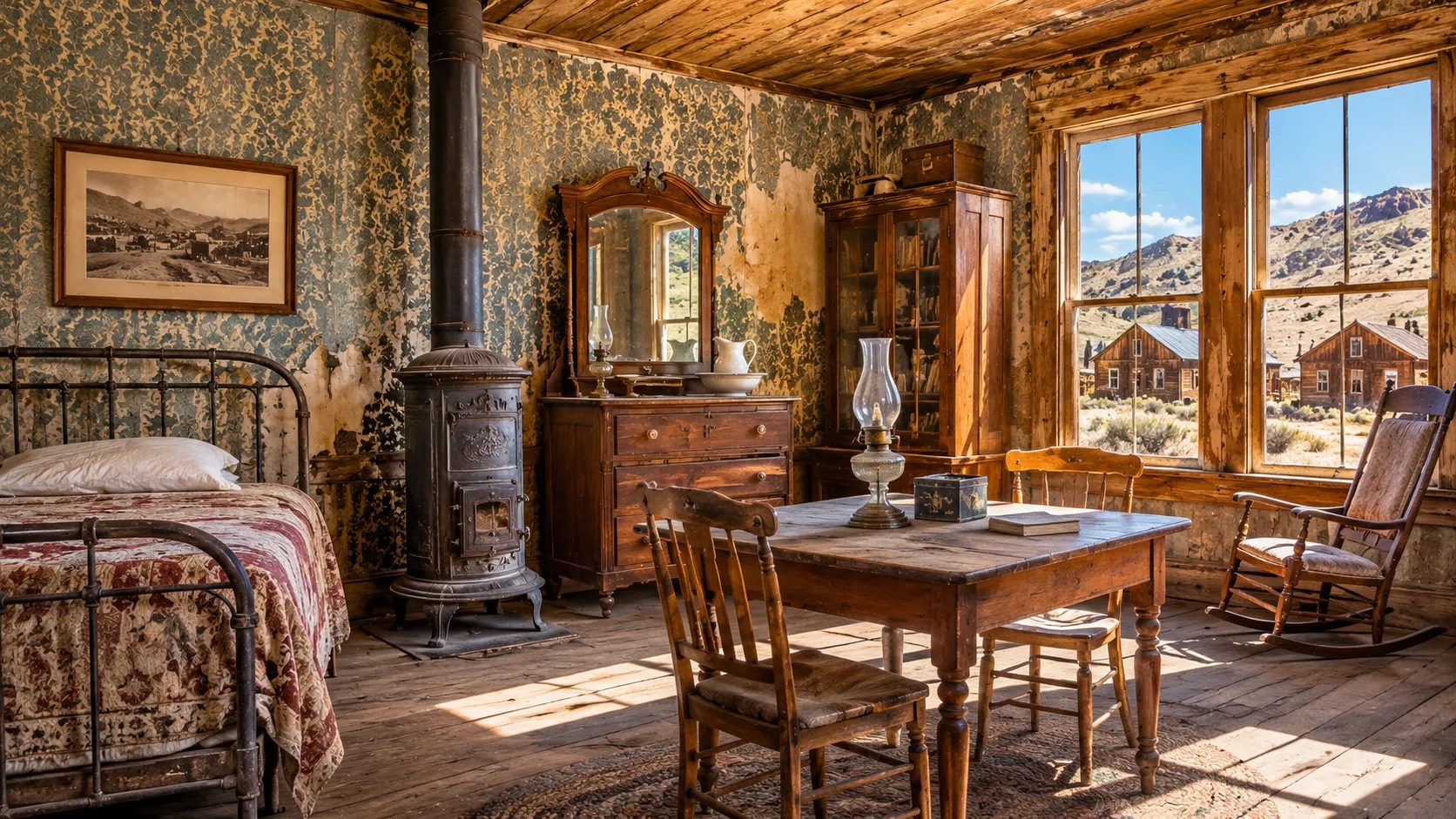
If the aesthetic is what got you curious, the actual payoff is better than the scroll: standing in a real doorway that someone walked out of in 1953 and never came back to hits different than a looping video clip, and you don't need a creator's camera angle to feel it — the raking afternoon light through a dust-streaked window does that on its own.
It's also worth going with your eyes open about what's actually allowed once you're there. A real ghost town comes with real rules — some are open public land, some are state-managed parks with entrance fees and set hours, and some are private property where showing up unannounced is trespassing, not content. Our legal access guide breaks down exactly which category a given site falls into, so the trip that started with a TikTok feed doesn't end with you on the wrong side of a fence.
How to Actually Go See This for Yourself
You don't need to become an urban explorer or go anywhere sketchy to experience this in real life. Start with towns that are legitimately open to the public and well-documented, like Bodie, where the access rules, hours, and history are all a matter of public record rather than guesswork. From there, the niche opens up fast — hundreds of real, verified ghost towns across the American West, each with its own version of the same empty-hallway feeling, minus the uncertainty about whether what you're looking at is even real.
Frequently asked questions
- Is the "liminal space" trend the same thing as ghost town tourism?
- Not exactly — liminal space is a broader internet aesthetic that includes fictional, staged, and AI-generated content, while ghost towns are real, specific historic sites. They share a visual mood, but ghost towns are the verifiable, visitable version of what the aesthetic is often only imitating.
- Is Cerro Gordo open to the public like Bodie is?
- No. Cerro Gordo is private property, and visits and overnight stays happen only by arrangement with the current owners. Bodie, by contrast, is a California State Historic Park open to the public during regular hours. Check access rules for any site before planning a trip — they differ a lot from town to town.
- Why do abandoned places feel unsettling even when they're not scary?
- Researchers connect the feeling to the "uncanny valley" effect — a place that looks almost exactly like a space you know well (a hallway, a store, a motel room) but is empty and slightly off, which creates discomfort even without anything actually threatening present.
- Are all the "abandoned places" I see online real locations?
- No, and that's worth knowing before you go looking for one in person. Plenty of viral content is staged, digitally created, or shot somewhere with no public access. A documented, visitable ghost town with a known history is a different, more reliable thing to plan a trip around.
Explore the Map
The towns behind this trend are real, documented, and in most cases open to visit. Explore the map to find one near you and see the real version of what's been showing up in your feed.