The story
Cabezon grew in the 1870s as a farming and sheep-ranching village in the Rio Puerco Valley, in the shadow of Cabezon Peak — the black volcanic plug that gives the town its name (cabezón, 'big head'). Originally called La Posta, it became a stage stop on the road from Santa Fe toward Fort Wingate and Prescott.
The merchant Richard Heller came in 1888, built a store, ran thousands of cattle and sheep, and helped raise the adobe church of San José that still stands. At its height around 1920 the village held about 250 people. Its decline came from land and water: the government's 1934 purchase of the neighboring Ojo del Espíritu Santo grant squeezed the grazing range, and in the early 1940s the earthen dams that watered the valley failed in a flood. Heller died in 1947 and the town emptied soon after.
What remains today
The adobe church, Heller's store, and a cluster of roofless adobe houses below Cabezon Peak — a strikingly intact ruin of a Hispano ranching village.
Society Pro
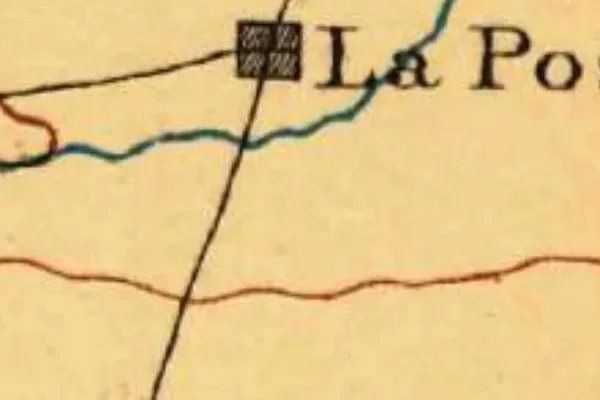
Cabezon on the old USGS survey, and what the record holds around it
Within five miles the record maps 0 mine shafts, adits and prospect pits, 0 named mineral sites, 1 lost places and 0 cemeteries. Pro puts them on the map with the 1879–1919 survey underneath and a swipe to today.
From the archives


Cabezon turns up on 1,024 digitized newspaper pages from New Mexico — read them free in the Library of Congress's Chronicling America collection.
Source: Library of Congress digital collections.
Questions from the field
- Can you go inside the buildings at Cabezon?
- No — Cabezon is private property with no-trespassing signs posted. The adobe church and houses are best seen and photographed from the public county road that passes below the townsite.
From the field
The most valuable part of this record is the part only visitors can write.
Stamp your passport
Check in at Cabezon — GPS-verified visits earn an inked stamp.
File a field report
Road conditions, what's still standing, what's gone — your report joins the record.
Add photographs
Credited, dated, and preserved as part of Cabezon's permanent record.
No field reports yet — sign in to file the first.
Primary sources for this record
- — USGS GNIS feature 902799
- — New Mexico Magazine — ghost towns of the Rio Puerco Valley
- — Ghosttowns.com — Cabezon, New Mexico