The story
Jimmie Pearce's 1894 gold strike birthed the Commonwealth Mine and a rush that famously drained the last miners out of fading Tombstone — houses were even hauled over whole. Pearce peaked around 1,500 people before the ore and the Depression ended it; the post office survives in a modern hamlet nearby.
The landmark is the 1896 Pearce General Store, an adobe-and-tin palace with its porch intact, plus the jail and mine ruins on the hill — a photogenic core kept by a handful of residents and preservation-minded owners.
What remains today
The famous general store (privately preserved), jail, church, post office, and Commonwealth mine ruins.
Society Pro
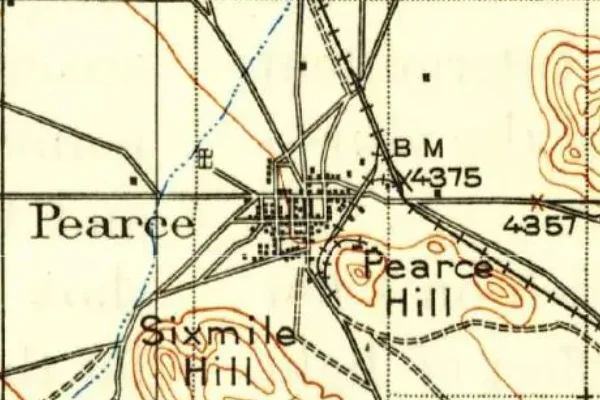
Pearce on the old USGS survey, and what the record holds around it
Within five miles the record maps 137 mine shafts, adits and prospect pits, 22 named mineral sites, 0 lost places and 1 cemeteries. Pro puts them on the map with the 1879–1919 survey underneath and a swipe to today.
Questions from the field
- Is the Pearce general store open?
- It's privately owned and opens irregularly; even closed, its exterior is the signature photograph of Cochise County's ghost-town loop.
From the field
The most valuable part of this record is the part only visitors can write.
Stamp your passport
Check in at Pearce — GPS-verified visits earn an inked stamp.
File a field report
Road conditions, what's still standing, what's gone — your report joins the record.
Add photographs
Credited, dated, and preserved as part of Pearce's permanent record.
No field reports yet — sign in to file the first.
Primary sources for this record
- — Cochise County records — Commonwealth Mine
- — Pearce-Sunsites community history
- — Arizona ghost town trail (Gleeson–Courtland–Pearce) guides