The story
Glastenbury was a logging and charcoal town high in the mountains of southwestern Vermont, chartered in 1761 but only really populated a century later, when timber crews arrived to feed charcoal kilns and the iron furnaces down in Bennington. At its 1880s peak about 240 people lived in the settlements of South Glastenbury and Fayville, tied to the valley by a logging railroad.
The mountain was logged out within a generation. When the timber gave out, promoters converted the railroad into an electric trolley and built a hotel and casino, betting on tourism; a flood in 1898 wrecked the line, the resort failed, and the town emptied for good. Vermont formally unincorporated Glastenbury — and neighboring Somerset — in 1937, a rare legal erasure of an entire town. The mountain is wilderness again today, crossed by the Long Trail.
Glastenbury is also the heart of the 'Bennington Triangle,' a name the author Joseph Citro coined in 1992 for a cluster of real disappearances near the mountain between 1945 and 1950: Middie Rivers, Paula Welden, James Tetford, Paul Jepson, and Frieda Langer, whose remains were found the following year. Those vanishings are documented history and were never solved. The supernatural 'triangle' built around them since is folklore, and we present it as folklore, not fact.
What remains today
Cellar holes, charcoal-kiln mounds, and old rail grades in the forest; no standing buildings. The Long Trail and Appalachian Trail cross the former town.
Society Pro
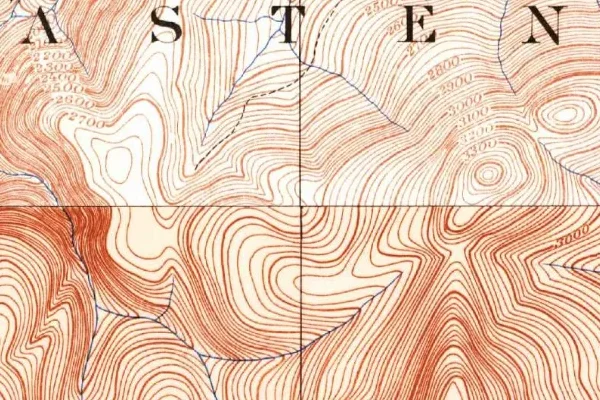
Glastenbury on the old USGS survey, and what the record holds around it
Within five miles the record maps 0 mine shafts, adits and prospect pits, 0 named mineral sites, 1 lost places and 3 cemeteries. Pro puts them on the map with the 1879–1919 survey underneath and a swipe to today.
From the archives
Glastenbury turns up on 3,963 digitized newspaper pages from Vermont — read them free in the Library of Congress's Chronicling America collection.
Source: Library of Congress digital collections.
Questions from the field
- Is the Bennington Triangle real?
- The disappearances are real and documented: five people vanished near Glastenbury Mountain between 1945 and 1950, and the cases were never solved. The 'Bennington Triangle' as a paranormal zone is a modern legend coined in 1992, which we report as folklore.
- Why did Glastenbury become a ghost town?
- Its logging and charcoal economy exhausted the forest by the 1890s; a failed tourist railroad and an 1898 flood finished it, and Vermont legally unincorporated the town in 1937.
From the field
The most valuable part of this record is the part only visitors can write.
Stamp your passport
Check in at Glastenbury — GPS-verified visits earn an inked stamp.
File a field report
Road conditions, what's still standing, what's gone — your report joins the record.
Add photographs
Credited, dated, and preserved as part of Glastenbury's permanent record.
No field reports yet — sign in to file the first.
Primary sources for this record
- — USGS GNIS feature 1460349
- — Vermont legislative records — 1937 unincorporation
- — Bennington Museum / Glastenbury histories