The story
Ardmore grew where the Burlington's tracks crossed into South Dakota — a shipping town for wheat and cattle whose fatal flaw was announced early: the water was too alkaline to drink, and residents hauled fresh water in by rail their entire civic life, latterly trading eggs for it.
The depression thinned it, the trains stopped deigning to stop, and by the 1980s the post office gave up. Its intact-but-crumbling main street and houses full of left-behind furniture have made it the Dakotas' most photographed true ghost town; most parcels remain private, watched by neighbors across the section line.
What remains today
A largely complete townsite — commercial row, school, houses — in slow collapse on the Nebraska line.
Society Pro
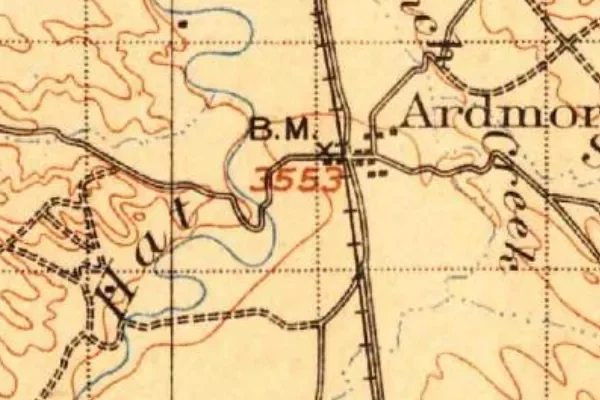
Ardmore on the old USGS survey, and what the record holds around it
Within five miles the record maps 0 mine shafts, adits and prospect pits, 1 named mineral sites, 0 lost places and 2 cemeteries. Pro puts them on the map with the 1879–1919 survey underneath and a swipe to today.
From the archives

Source: Library of Congress digital collections.
Questions from the field
- Can you walk through Ardmore's buildings?
- No — the townsite is private property, and its reputation for open exploration is exactly why it's deteriorating. Road-viewing is legal and shows nearly everything.
From the field
The most valuable part of this record is the part only visitors can write.
Stamp your passport
Check in at Ardmore — GPS-verified visits earn an inked stamp.
File a field report
Road conditions, what's still standing, what's gone — your report joins the record.
Add photographs
Credited, dated, and preserved as part of Ardmore's permanent record.
No field reports yet — sign in to file the first.
Primary sources for this record
- — USGS GNIS feature 1261200
- — Fall River County histories
- — Burlington Route records