The story
Tahawus failed spectacularly twice. The 1826 iron works in the High Peaks kept fouling on a mysterious impurity in its ore, and after decades of struggle the 'Deserted Village' emptied by 1857 — leaving the great stone blast furnace in the forest. The impurity was titanium dioxide, worthless then.
In 1941 that impurity became the point: National Lead reopened the site as a strategic titanium mine, moving the surviving village buildings and running until 1989. History gave the place one more line — it was while lunching near here in September 1901 that Vice President Theodore Roosevelt got word McKinley was dying, beginning his midnight wagon dash to the presidency. The furnace, the McIntyre house, and the vast pits remain along the Upper Works trailheads.
What remains today
The monumental 1854 blast furnace, the MacNaughton cottage (where TR stayed), mine pits and tailings, at the High Peaks' southern gate.
Society Pro
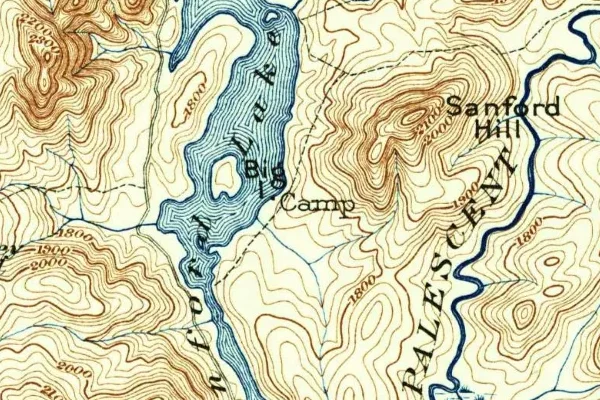
Tahawus on the old USGS survey, and what the record holds around it
Within five miles the record maps 0 mine shafts, adits and prospect pits, 21 named mineral sites, 0 lost places and 0 cemeteries. Pro puts them on the map with the 1879–1919 survey underneath and a swipe to today.
From the archives

Tahawus turns up on 142 digitized newspaper pages from New York — read them free in the Library of Congress's Chronicling America collection.
Source: Library of Congress digital collections.
Questions from the field
- Why did the original Tahawus iron works fail?
- Its ore was 'contaminated' — with titanium, unusable in the 1840s. A century later the same deposit was reopened precisely for that titanium during WWII.
From the field
The most valuable part of this record is the part only visitors can write.
Stamp your passport
Check in at Tahawus — GPS-verified visits earn an inked stamp.
File a field report
Road conditions, what's still standing, what's gone — your report joins the record.
Add photographs
Credited, dated, and preserved as part of Tahawus's permanent record.
No field reports yet — sign in to file the first.
Primary sources for this record
- — USGS GNIS feature 973137
- — Adirondack histories — McIntyre/Tahawus works
- — Open Space Institute — Tahawus tract